The Water Rats (Pindar of Wakefield)
328 Gray's Inn Rd, King's Cross
London, Greater London, United Kingdom
51.5290° N · -0.1195° W
Get DirectionsWhat happened here?
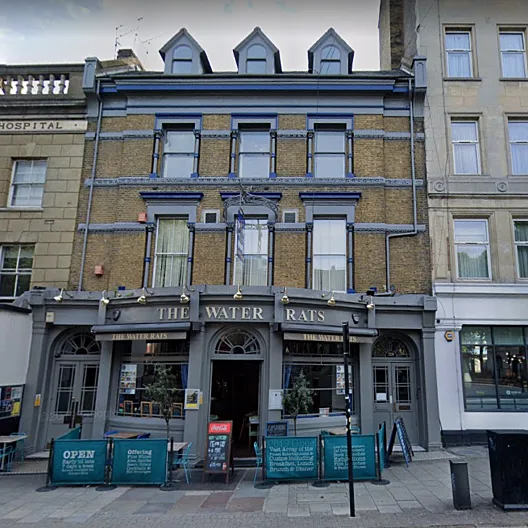
The Water Rats at 328 Grays Inn Road in Kings Cross is one of London's most historically significant music venues. The building dates back to 1517, and the present pub was built in 1878 — a place once patronised by Karl Marx and Friedrich Engels. It was known as the Pindar of Wakefield until 1992, when it was renamed after the Grand Order of Water Rats, a British entertainment industry charity whose past members include Charlie Chaplin, Peter Sellers, and Laurel and Hardy. Across three very different decades, three legendary acts played their breakthrough shows in this small upstairs room.
Bob Dylan's First UK Performance
In December 1962, a twenty-one-year-old Bob Dylan arrived in London for the first time. He'd been invited by BBC television director Philip Saville, who had seen him playing in Greenwich Village and thought he'd be perfect for a role in a BBC drama called Madhouse on Castle Street. Dylan performed "Blowin' in the Wind" in the broadcast — no copy survives, as the BBC wiped the tape in 1968.
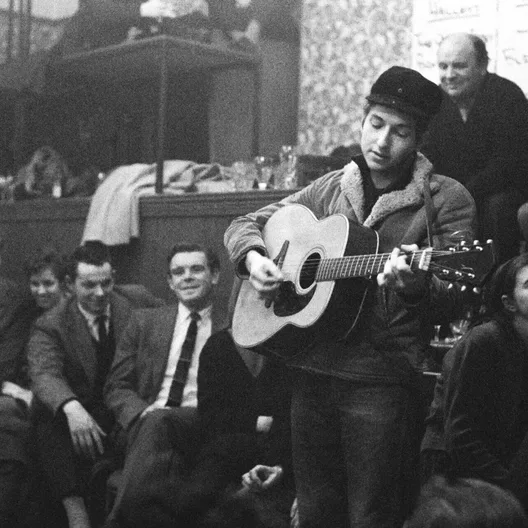
While in London, Dylan turned up at the Singers' Club, a folk night run by Ewan MacColl and Peggy Seeger at the Pindar of Wakefield. On 22 December 1962, at the club's Christmas gathering, the young American played for the crowd. The bouncer nearly turned him away at the door, but Seeger insisted he be let in. Photographer Brian Shuel documented the evening — images that have since become some of the most recognisable early Dylan photographs. It was his first performance on British soil.
The Pogues' First Ever Gig
On 4 October 1982, a band called Pogue Mahone played their debut gig at the Pindar of Wakefield. The group was Shane MacGowan, Spider Stacy, and Jem Finer — three men with a tin whistle, a guitar, and an idea to fuse Irish traditional music with punk rock energy. The name was an anglicisation of the Irish phrase póg mo thóin — "kiss my arse" — a sentence Spider Stacy had found in James Joyce's Ulysses.
The lineup filled out quickly. James Fearnley joined on accordion, Cait O'Riordan on bass, and Andrew Ranken on drums. The name was eventually shortened to The Pogues after the BBC objected to the full Irish translation. What started in this upstairs room in Kings Cross became one of the most influential bands of the 1980s — a group that rewrote the rules of folk music and gave the world "Fairytale of New York."
Oasis's London Debut
On 27 January 1994, Oasis played their first London show at the Water Rats. The room was rammed — a sell-out crowd packed in while another 200 people were turned away at the door. The audience was thick with music journalists and industry figures, all trying to see what the noise coming out of Manchester was about.
The band played an eight-song set: "Shakermaker," "Bring It On Down," "Digsy's Dinner," "Live Forever," "Cloudburst," "Up in the Sky," "Cigarettes & Alcohol," and — for the first time anywhere — "Supersonic." Definitely Maybe wouldn't be released for another seven months, but by the end of the night, everyone in the room knew something was happening. Two other bands were on the bill that night — Cream Soda and Orange Deluxe. Nobody remembers their sets.
Visiting Today
The Water Rats is still an active live music venue, hosting gigs most nights in the upstairs room. It's a short walk from Kings Cross and St Pancras stations. The pub downstairs is open to everyone — a proper London boozer with a rich history written into the walls. There's a plaque outside marking Dylan's first UK performance. For a single room to have launched Dylan in Britain, birthed The Pogues, and introduced Oasis to London is a record that no other venue in the country can match.
The Water Rats at 328 Grays Inn Road in Kings Cross is one of London's most historically significant music venues. The building dates back to 1517, and the present pub was built in 1878 — a place once patronised by Karl Marx and Friedrich Engels. It was known as the Pindar of Wakefield until 1992, when it was renamed after the Grand Order of Water Rats, a British entertainment industry charity whose past members include Charlie Chaplin, Peter Sellers, and Laurel and Hardy. Across three very different decades, three legendary acts played their breakthrough shows in this small upstairs room.
Bob Dylan's First UK Performance
In December 1962, a twenty-one-year-old Bob Dylan arrived in London for the first time. He'd been invited by BBC television director Philip Saville, who had seen him playing in Greenwich Village and thought he'd be perfect for a role in a BBC drama called Madhouse on Castle Street. Dylan performed "Blowin' in the Wind" in the broadcast — no copy survives, as the BBC wiped the tape in 1968.
While in London, Dylan turned up at the Singers' Club, a folk night run by Ewan MacColl and Peggy Seeger at the Pindar of Wakefield. On 22 December 1962, at the club's Christmas gathering, the young American played for the crowd. The bouncer nearly turned him away at the door, but Seeger insisted he be let in. Photographer Brian Shuel documented the evening — images that have since become some of the most recognisable early Dylan photographs. It was his first performance on British soil.
The Pogues' First Ever Gig
On 4 October 1982, a band called Pogue Mahone played their debut gig at the Pindar of Wakefield. The group was Shane MacGowan, Spider Stacy, and Jem Finer — three men with a tin whistle, a guitar, and an idea to fuse Irish traditional music with punk rock energy. The name was an anglicisation of the Irish phrase póg mo thóin — "kiss my arse" — a sentence Spider Stacy had found in James Joyce's Ulysses.
The lineup filled out quickly. James Fearnley joined on accordion, Cait O'Riordan on bass, and Andrew Ranken on drums. The name was eventually shortened to The Pogues after the BBC objected to the full Irish translation. What started in this upstairs room in Kings Cross became one of the most influential bands of the 1980s — a group that rewrote the rules of folk music and gave the world "Fairytale of New York."
Oasis's London Debut
On 27 January 1994, Oasis played their first London show at the Water Rats. The room was rammed — a sell-out crowd packed in while another 200 people were turned away at the door. The audience was thick with music journalists and industry figures, all trying to see what the noise coming out of Manchester was about.
The band played an eight-song set: "Shakermaker," "Bring It On Down," "Digsy's Dinner," "Live Forever," "Cloudburst," "Up in the Sky," "Cigarettes & Alcohol," and — for the first time anywhere — "Supersonic." Definitely Maybe wouldn't be released for another seven months, but by the end of the night, everyone in the room knew something was happening. Two other bands were on the bill that night — Cream Soda and Orange Deluxe. Nobody remembers their sets.
Visiting Today
The Water Rats is still an active live music venue, hosting gigs most nights in the upstairs room. It's a short walk from Kings Cross and St Pancras stations. The pub downstairs is open to everyone — a proper London boozer with a rich history written into the walls. There's a plaque outside marking Dylan's first UK performance. For a single room to have launched Dylan in Britain, birthed The Pogues, and introduced Oasis to London is a record that no other venue in the country can match.
Plan your visit
Artist associated with location
Nearby cafés & pubs
Fan pilgrimage site
Active music venue
Historic music venue
Reviews
You've already reviewed this landmark.