What happened here?
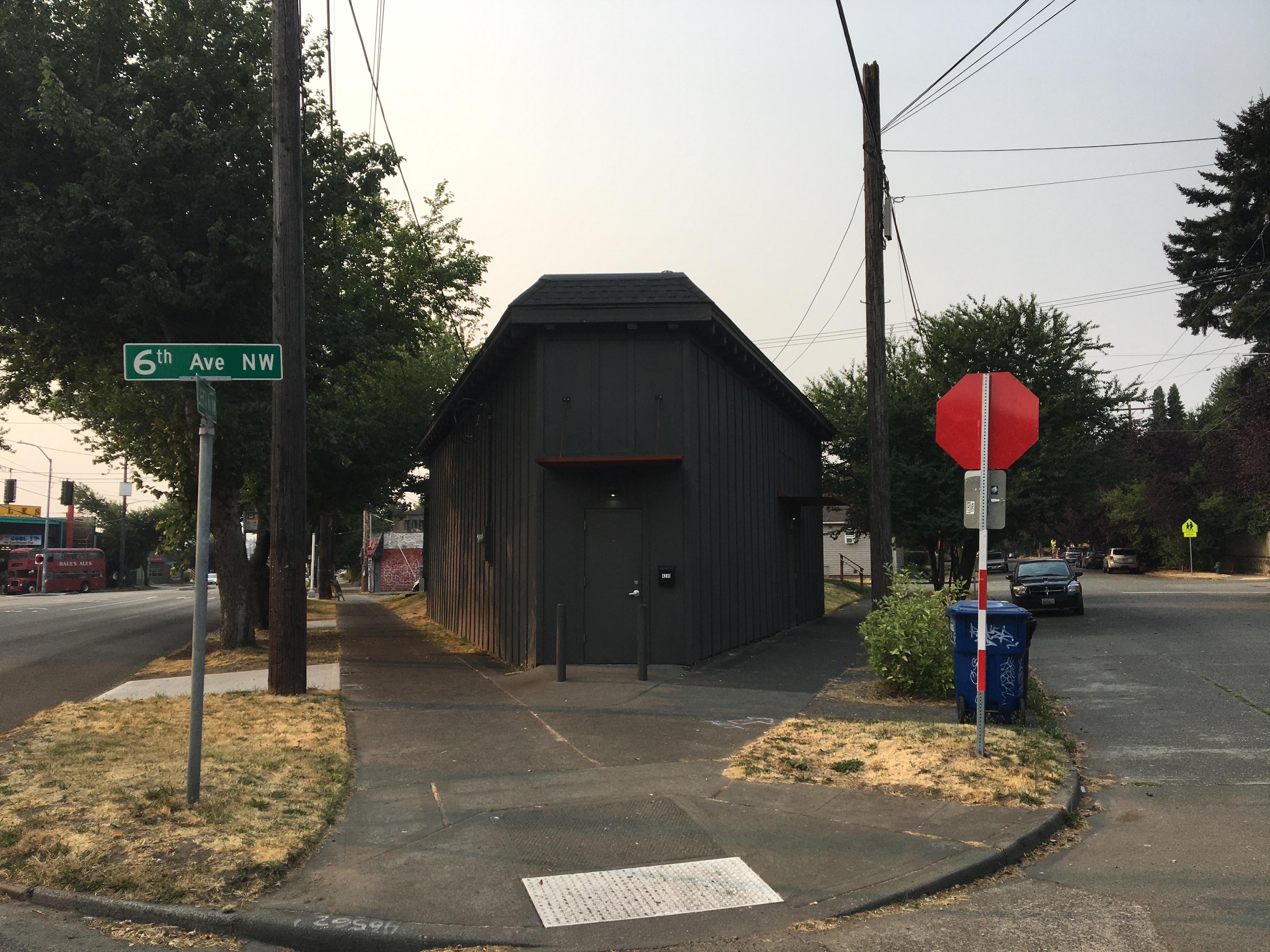
In late 1988 and early 1989, Nirvana recorded their debut album Bleach at Reciprocal Recording — a small eight-track studio built into a triangular wedge of a building at 4230 Leary Way NW in Seattle's Ballard neighbourhood. The building had once been a Greek bakery. Chris Hanzsek and Tina Casale had opened the studio in 1986 with cheap rates and a deliberate punk-friendly attitude, and it quickly became the engine room of the emerging Seattle sound.
The album was produced by Jack Endino, who was already central to the city's underground scene. The band — Kurt Cobain, Krist Novoselic, and drummer Chad Channing — recorded across roughly thirty hours of studio time, spread over five sessions between Christmas Eve 1988 and 24 January 1989. The total cost came to $606.17. The sessions were financed by Jason Everman, an old high-school friend of Channing's, whose name appeared on the album credits despite not playing on the record.
Cobain was particular about the sound he wanted — dry, crunchy, something closer to Thin Lizzy or AC/DC than to the polished production that would come later on Nevermind. Endino delivered exactly that. Bleach was released on Sub Pop in June 1989 and initially sold modestly, but its reputation grew steadily. It has since sold over two million copies.
Reciprocal Recording — later renamed Word of Mouth — was also where Mudhoney, Soundgarden, and Tad recorded early material that helped define the Seattle scene before it broke worldwide. The building still stands on its triangular lot at the intersection of Leary Way and 15th Avenue NW, though it no longer operates as a recording studio. For a few years in the late 1980s, this modest room was the centre of something enormous.