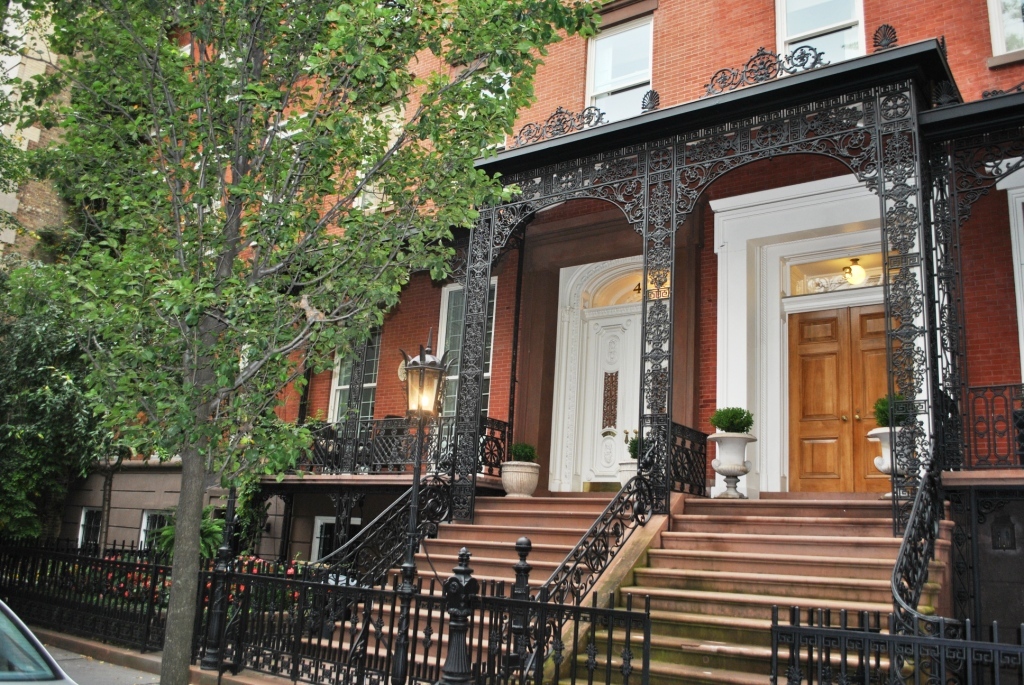
What happened here?
The staircase on the cover of Bob Dylan's Highway 61 Revisited — arguably the most important rock album ever recorded — is located at 4 Gramercy Park West in Manhattan. Photographer Daniel Kramer shot the image in August 1965, just days after Dylan's incendiary electric set at the Newport Folk Festival had split the folk world in two.
In the photograph, Dylan sits on the brownstone steps wearing a blue and magenta shirt, holding his Ray-Ban sunglasses. His manager Albert Grossman's wife Sally can be seen reflected in the sunglasses, sitting nearby. The image captures Dylan in the middle of his most explosive creative period — the album, released on 30 August 1965, contained "Like a Rolling Stone," "Desolation Row," and "Ballad of a Thin Man," and marked his full transformation from acoustic troubadour to electric rock poet.
Kramer had been documenting Dylan since late 1964, following him through recording sessions, concerts, and quiet moments backstage. The Highway 61 Revisited cover shoot took place on the steps of the building where Grossman kept a New York office — the same Gramercy Park townhouse that had previously been home to silent film actress Theda Bara. Several shots were taken that day; the chosen image shows Dylan at his most casually defiant, staring past the camera.
The recording sessions for Highway 61 Revisited had taken place in June and August 1965 at Columbia Studio A on Seventh Avenue in Manhattan. Dylan assembled a loose group of musicians including Mike Bloomfield on guitar and Al Kooper — who famously bluffed his way onto the organ for "Like a Rolling Stone" despite never having played the instrument before. The album was produced by Bob Johnston after Tom Wilson was replaced mid-sessions.
The building at 4 Gramercy Park West still stands, its brownstone facade and steps largely unchanged from 1965. Gramercy Park itself is one of only two private parks remaining in New York — residents of the surrounding buildings hold keys to the iron-gated square. Visitors can view the steps from the sidewalk and stand in the same spot where Kramer positioned his camera sixty years ago.