What happened here?
Blaze Foley was shot and killed in the early hours of 1 February 1989 at a house in the Bouldin Creek neighbourhood of south Austin, Texas. He was 39 years old. Foley had gone to the home of his friend Concho January — an elderly veteran — after learning that Concho's son, Carey January, had been beating his father and stealing his Social Security and veterans' pension cheques to buy drugs.
When Foley confronted Carey, the situation escalated. Carey January shot Foley in the chest with a .22-calibre rifle. Concho January told investigators that Foley had been trying to defend him. Despite this, Carey pleaded self-defence at trial and in September 1989, after two hours of deliberation, a jury acquitted him of first-degree murder.
Foley had spent his adult life in the marginal spaces of Austin's music scene — sleeping in trees, on floors, in trailers — writing songs that were passed around on cassette tapes and performed in whatever rooms would have him. He was one of Townes Van Zandt's closest friends. Van Zandt would later write "Blaze's Blues" in his memory and spoke of Foley as one of the finest songwriters he had ever known.
Foley's best-known song, "If I Could Only Fly," was later recorded by Merle Haggard. In 2018, Ethan Hawke directed Blaze, a feature film based on Sybil Rosen's memoir Living in the Woods in a Tree, which brought Foley's story to a much wider audience. The film portrayed both his brilliance and his self-destruction with unflinching honesty.
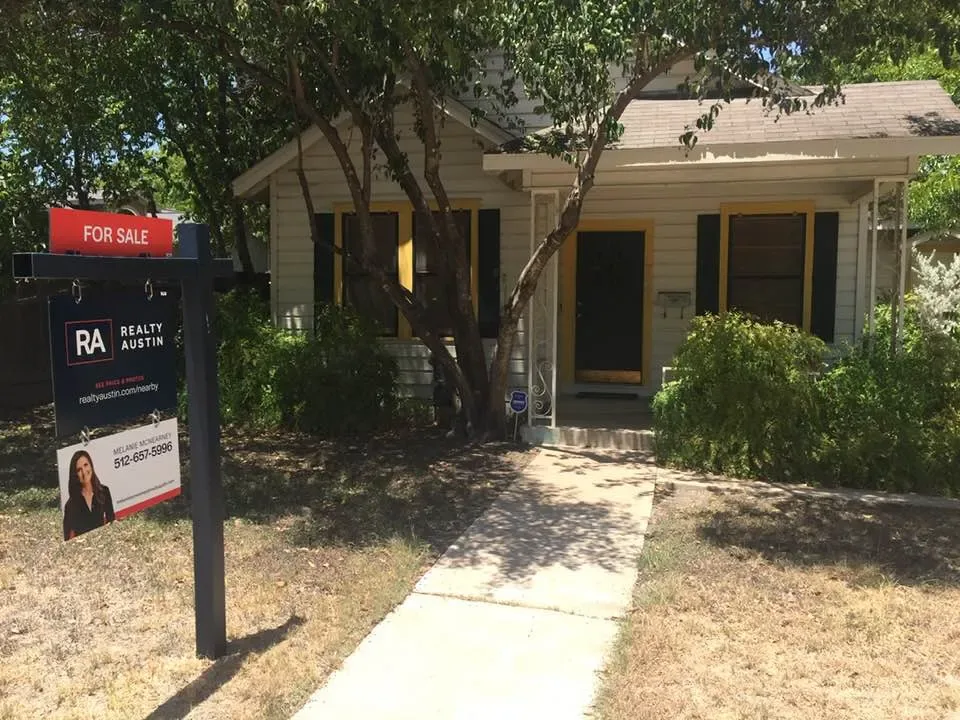
The house where Foley was killed is not formally marked, and its precise address has not been widely published out of respect for the current occupants. The coordinates place the location in south Austin, near South 1st Street and Oltorf Street, in the neighbourhood where the incident took place. There is nothing at the site to indicate what happened there — just a quiet residential street in a part of Austin that has changed considerably since 1989.