Led Zeppelin's Physical Graffiti album cover location
What happened here?
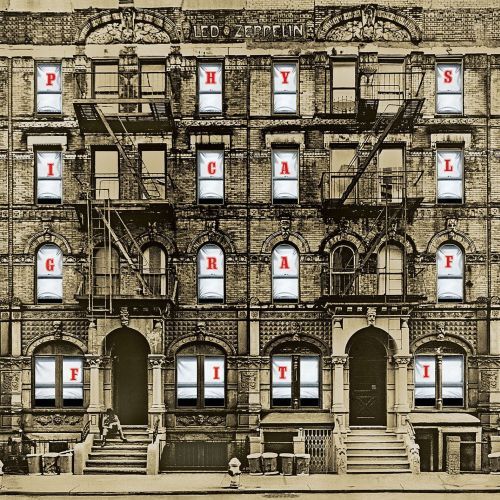
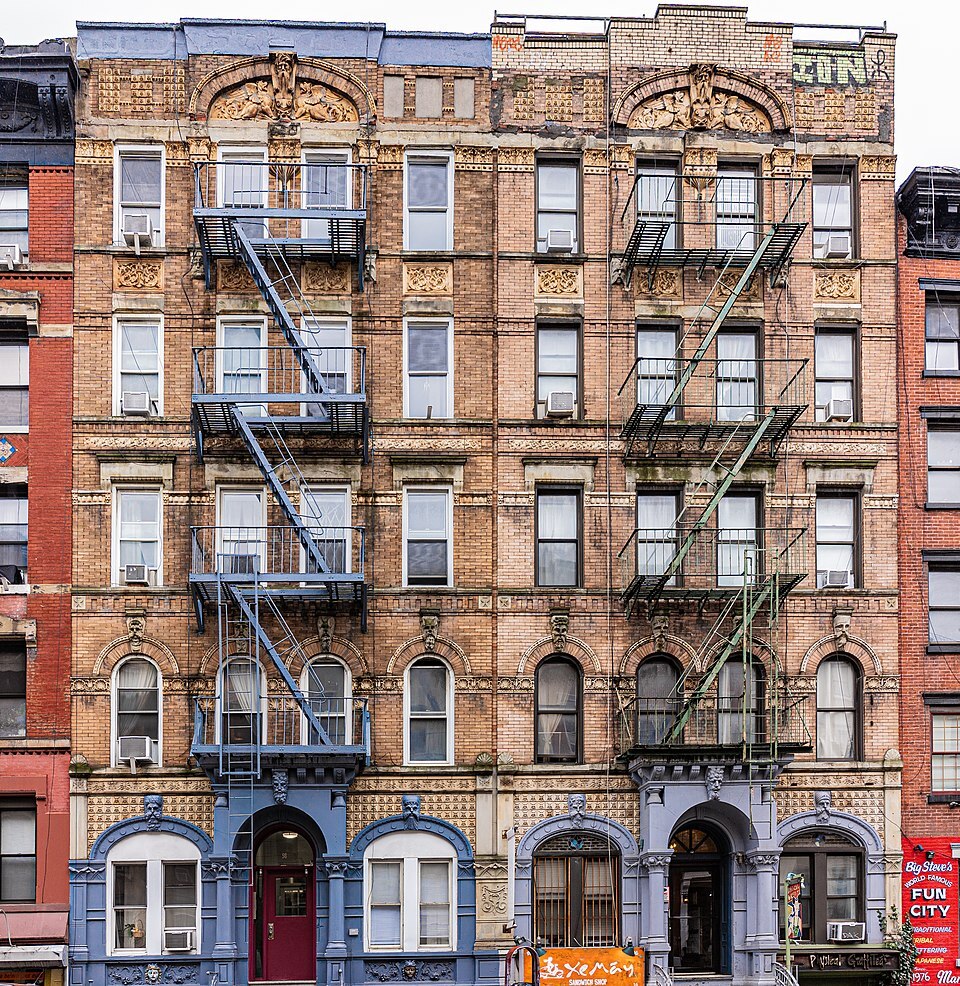
The twin tenement buildings at 96 and 98 St. Mark's Place in New York's East Village became one of the most recognisable album covers in rock history when they appeared on Led Zeppelin's 1975 double album Physical Graffiti. Graphic designer Peter Corriston chose the buildings for their symmetry and character — he later told Fox News Digital that "the building just looked like it was ridden hard and put away wet."
Corriston, working with art director Mike Doud, created one of the most innovative album packages of its era. The original vinyl jacket featured die-cut windows in the building's facade, with interchangeable inner sleeves that could be swapped to reveal different scenes behind each window. One arrangement spelled out "Physical Graffiti" in red letters; another placed images of notable figures — W.C. Fields, Pope Leo XIII, Buzz Aldrin — peering from the windows like tenants in a surreal apartment block.
The buildings themselves are five storeys tall, though only four appear on the cover. They sit on the south side of St. Mark's Place between First Avenue and Avenue A, in the heart of a neighbourhood that by the mid-1970s had become a hotbed of punk, art, and counterculture. The street had already hosted the likes of Andy Warhol and the Velvet Underground — Led Zeppelin's album cover added another layer to its mythology.
Both buildings still stand today in largely their original condition, and remain a popular stop for music fans walking through the East Village. The ground-floor storefronts have changed hands over the decades, but the brownstone facades, fire escapes, and window details are immediately recognisable to anyone who has spent time with the album artwork.