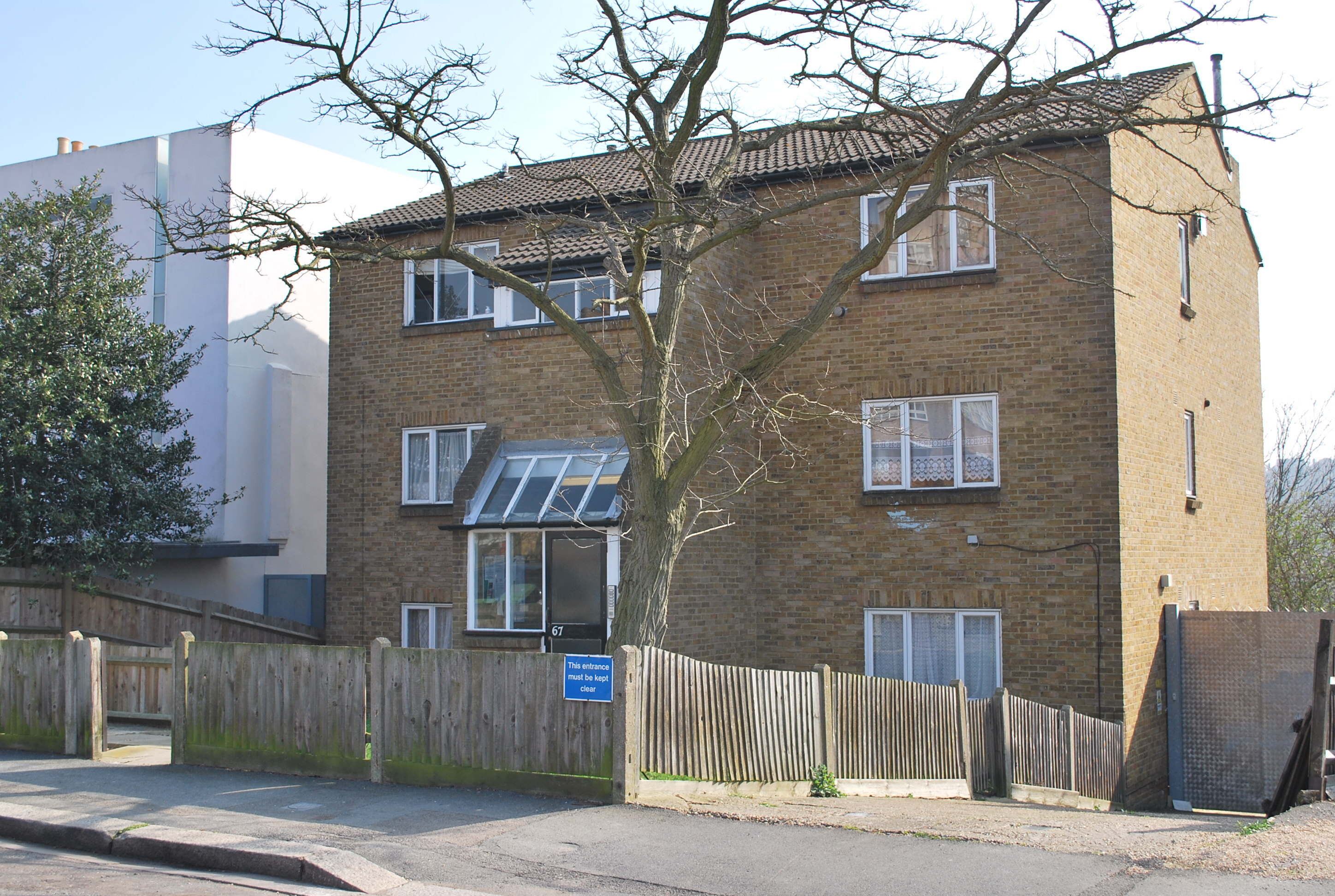
What happened here?
Bon Scott died in a car parked outside 67 Overhill Road in East Dulwich, south London, on February 19, 1980. He had been brought here in the early hours of the morning by his friend Alistair Kinnear, who had been unable to rouse Scott after a night of heavy drinking and had left him in the parked car intending to check on him later. When Kinnear returned that afternoon, Scott was unresponsive. He was pronounced dead at King's College Hospital. The cause of death was acute alcohol poisoning; the coroner's verdict was death by misadventure.
The circumstances of that final night have been reconstructed many times. Scott had attended a concert at the Music Machine in Camden, then continued drinking at a club in Leicester Square. Rather than taking him to his flat in Victoria, Kinnear drove to his own home in East Dulwich — a decision that, under different circumstances, would have been unremarkable. Scott was 33 years old. AC/DC were at the height of their powers, with Highway to Hell having recently broken them internationally. The album that followed — Back in Black, recorded with Brian Johnson as vocalist — became one of the best-selling records in history and stands as a tribute to the man who died on this quiet street.
The details surrounding Scott's death have been disputed for decades. Jesse Fink's 2017 biography Bon: The Last Highway challenged the accepted timeline, suggesting Scott may not have been at the Music Machine at all that evening, and that the sequence of events told by Kinnear doesn't fully add up. Whether the official account is entirely accurate may never be resolved, but what is certain is that Bon Scott's life ended here, on this residential street in south-east London, far from the stage.
Overhill Road is a quiet Edwardian terrace street in East Dulwich. Number 67 is a private residence — there is no official plaque, though fans have occasionally left tributes. AC/DC devotees sometimes combine a visit here with other London Bon Scott locations: his flat at 15 Ashley Court in Westminster, and the Music Machine (now KOKO) in Camden. The street is purely residential, and visitors should be respectful of the people who live here.