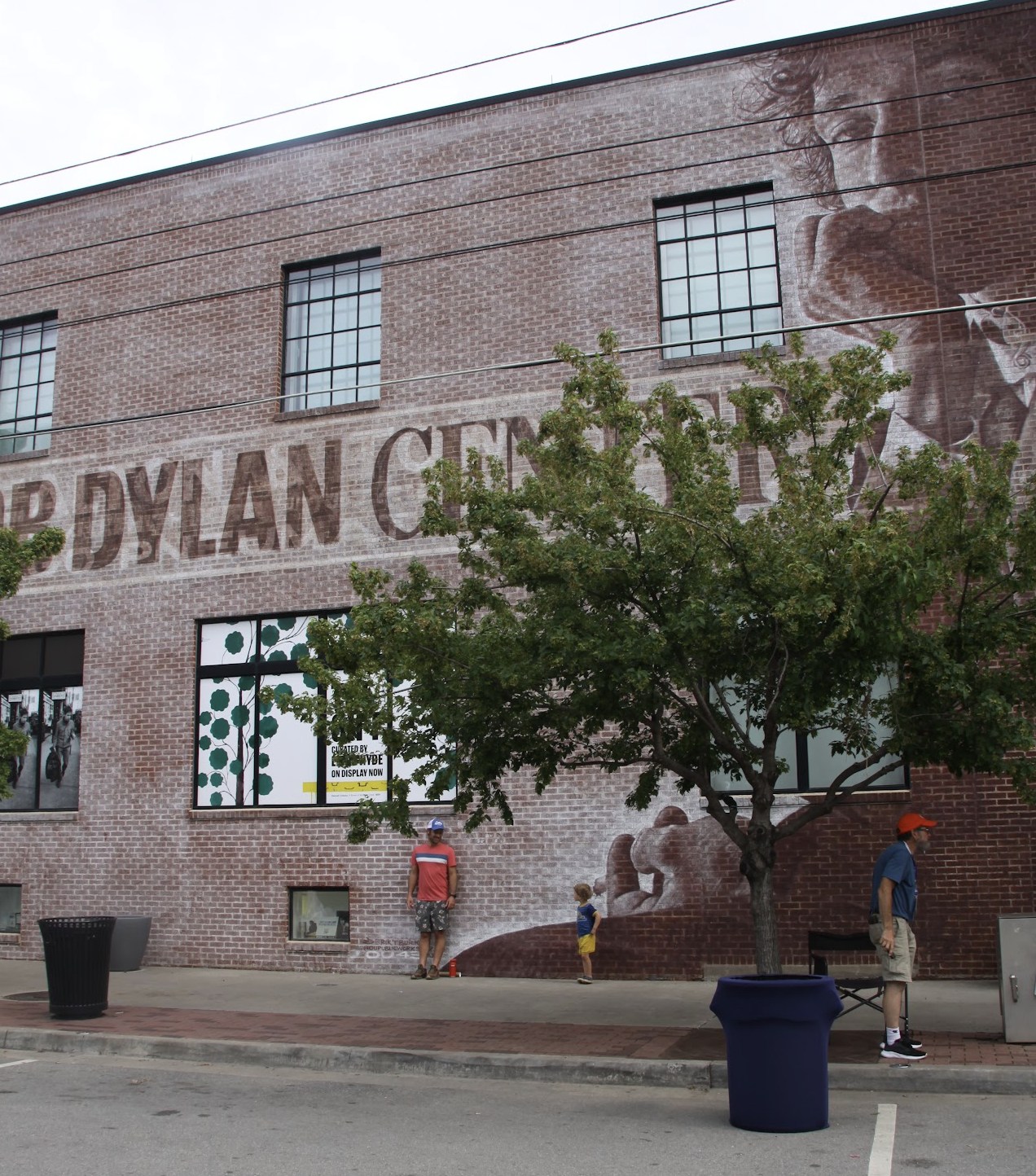
What happened here?
The Bob Dylan Center opened on 10 May 2022 at 116 East Reconciliation Way in Tulsa's Arts District. The 29,000-square-foot museum houses the Bob Dylan Archive — a collection of over 100,000 items spanning seven decades of Dylan's career, including handwritten lyric manuscripts, previously unreleased recordings, never-before-seen film performances, rare photographs, and visual art.
The archive came to Tulsa in 2016, when Dylan sold his personal collection to the George Kaiser Family Foundation and the University of Tulsa. It was a surprising choice of location — Dylan has no direct connection to Oklahoma — but the foundation's commitment to cultural preservation, and the existing presence of the Woody Guthrie Center just across the street, made Tulsa a natural home for both collections. Guthrie was Dylan's earliest and most formative influence; having the two archives in conversation feels deliberate.
The building was designed by Seattle-based architecture firm Olson Kundig. Inside, the permanent collection includes handwritten drafts of songs like "Blowin' in the Wind," "Tangled Up in Blue," and "Like a Rolling Stone" — with crossed-out lines and reworked verses visible on the page. A 55-seat screening room shows rare concert footage and documentary material, and rotating exhibitions explore specific eras or themes from Dylan's career.
The center sits in the heart of Tulsa's Arts District, alongside the Woody Guthrie Center, Philbrook Downtown, and ahha Tulsa. Admission is ticketed. The archive itself — held by the University of Tulsa's Institute for Bob Dylan Studies — is available to researchers by appointment, offering scholars access to notebooks, correspondence, and recordings that have never been publicly released.
For Dylan fans, the center offers something no concert or record can: a window into the process. Seeing a lyric sheet covered in revisions — words scratched out, arrows redirecting verses, entire stanzas abandoned — makes the scale of Dylan's output feel less mythical and more like labour. It's a museum about the work, not just the legend.